
Oct
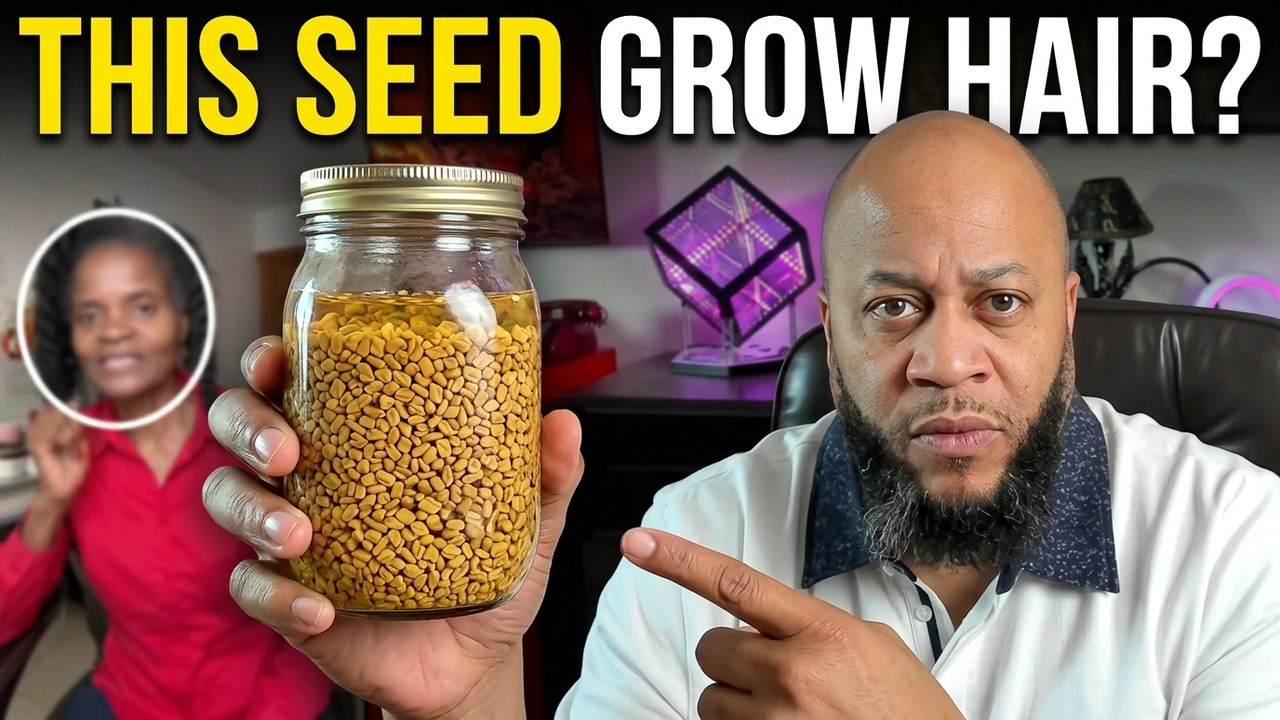
Peace, family. Herbalist Kareem here. You know I keep my beard right. On a recent livestream I talked about my own beard routine and played clips from a sister who is passionate about one simple seed for her hair: fenugreek. She was so excited about it that I went and got me some spray bottles so I could try it in my beard too.
This article walks you through what fenugreek is, how to make fenugreek water, how she uses it, and how I take care of my own beard. Ladies and kings, this one’s for both of you.
Watch the video here: This Natural Seed for Stronger, Healthier-Looking Hair
What is fenugreek?
Fenugreek is a small, golden-brown seed that’s been used in kitchens across India, the Middle East and North Africa for a very long time. It has a warm, slightly maple-like smell. You’ll find it in spice blends, and in a lot of natural hair circles it’s become a favorite for homemade hair rinses and sprays.
The sister in the video pointed out that fenugreek seed naturally contains protein, iron and amino acids. That’s part of why folks love using it in their hair regimen.
Why do people use fenugreek water on their hair?
From what the sister shared, and what a lot of natural hair folks say, the big reasons are:
- Moisture. She said one of the main reasons she likes it is that it helps moisturize her hair.
- Scalp feel. She said her scalp feels “brought to life” when she sprays it on.
- A light, water-based layer under your favorite oil or moisturizer.
- It’s cheap and natural. A spoonful of seeds and some water.
She was also clear that you have to use it routinely if you want to see a difference. One spray and done isn’t a routine.
How do I make fenugreek water?
Here’s the exact way she showed it, and it’s real easy.
You’ll need:
- A clean jar. Hers looked like a 32 oz jar.
- About 10 oz of water
- 1 tablespoon of fenugreek seeds
- A spray bottle
- A strainer
Steps:
- Pour about 10 oz of water into your jar.
- Add 1 tablespoon of fenugreek seeds.
- Put the lid on.
- Let it sit overnight, about 24 hours.
- Strain out the seeds and pour the water into your spray bottle.
You’ll notice the water starts to change color. She showed it turning a grayish color after only a couple of hours, and she normally lets it go the full 24.
Is there a faster way?
Yes. She said you can make it on the stove and have it ready in 10 to 15 minutes. If you go that route, keep it on low heat. Me, personally? I’d stick with the overnight soak and let it sit for a day.
How do I use fenugreek water on my hair?
Here’s her routine, step by step:
- Take your hair down and get it ready to moisturize. She was working with twists.
- Spray the scalp first. Get right down to the roots.
- Massage it into the scalp with your fingertips.
- Spray down the length of the hair.
- Get the ends. She really stressed this. Don’t forget your ends.
- Use the “praying hands” method. Press your hair between your flat palms and smooth down. She said this helps the product touch more of the strands.
- Follow with your moisturizer or oil, whatever you already like.
- Twist or style as usual, and then, like she said, leave your hair alone.
She said you can use fenugreek water in place of plain water in your routine. She sprays her scalp at least every two to three days.
A word on the praying hands
The sister added something beautiful: while you’re doing the praying hands, actually pray. Pray for your hair and pray for other people. I wasn’t going to cut nobody off while they were praying. Caring for yourself can be a spiritual practice, and I respect that.
Can men use fenugreek water in their beards?
She said, “ladies and guys,” so stop tripping, kings. It’s for you too. I’m planning to work it into my own beard routine.
Here’s what I do for my beard right now:
- Warm towel first. I take a warm towel and wipe my beard down.
- Cocoa butter cream. I’ve been using a cocoa butter face and body cream on my beard daily to keep it moist. I rub it all over my face too. When I’m going somewhere special, I put it on a little thicker.
- My own beard oil. Sometimes I mix my own beard oil, because I like the way it smells. For the carrier oil I use coconut oil and MCT oil, or jojoba oil.
To add fenugreek water, I’d spray it on after the warm towel, then follow with my cream or oil to seal it in. That’s the plan.
How should I store fenugreek water?
The video didn’t get into storage, so here’s common-sense kitchen advice. This is a fresh, water-based mix with no preservatives, so make small batches, keep the spray bottle clean, and toss it if it smells off or looks cloudy in a way it didn’t before. Many people keep their homemade sprays in the refrigerator and make a new batch often.
Are there any safety tips?
Even natural ingredients deserve respect:
- Patch test first. Spray a small area of skin and wait a day to make sure you don’t react.
- Allergies: Fenugreek is in the legume family. If you’re allergic to peanuts, chickpeas or other legumes, check with your provider before using it.
- Keep it out of your eyes.
- Stop if anything itches, burns or gets irritated.
- Pregnant? Ask your provider before using new herbs, even on your skin and scalp.
What else matters for healthy-looking hair?
Fenugreek water is a nice addition, but it’s not the whole story. A few things I always come back to:
- Gentle styling. Constant tension and pulling can stress the hair and edges. Give your hair breaks.
- Moisture and sealing. A water-based layer followed by an oil or cream.
- Consistency. Like the sister said, you have to do it routinely.
- Nourishment from the inside. Water, whole foods and enough protein give your body what it needs.
If you’re working on how you eat, our article on High Protein with Spirulina and our guide to Sea Moss Living Tonic are good reads.
Fenugreek hair water: quick questions
Do I need to grind the seeds?
No. She used whole seeds and just soaked them in water.
What do I do with the leftover seeds?
Many people compost them. Fenugreek is also a cooking spice, but if you soaked them for your hair, keep them for the garden, not the pot.
Does the smell linger?
Fenugreek has a warm, maple-like scent. Following with your favorite oil or cream helps.
How long until I notice a difference?
She said in her experience she usually notices a difference in about three weeks of steady use. Everybody’s hair is different, so be patient and consistent.
How do I build a simple weekly hair routine with fenugreek water?
Here’s a simple sample week, based on what the sister shared. Adjust it to your hair:
| Day | What to do |
|---|---|
| Day 1 | Make a fresh batch of fenugreek water (overnight soak) |
| Day 2 | Strain, bottle, and spray scalp and strands. Massage, seal with oil, twist. |
| Day 3 | Leave your hair alone. |
| Day 4 or 5 | Spray scalp and ends again, massage, seal. |
| Day 6 | Leave it alone. |
| Day 7 | Wash day with your usual shampoo and conditioner. Start a new batch. |
The key is spraying every two to three days, sealing in that moisture, and not over-handling your hair in between.
What oils pair well with fenugreek water?
The sister said to use whatever moisturizer or oil you already like, and I agree. In my own beard oil I use coconut oil, MCT oil or jojoba oil as the carrier. Spray the fenugreek water first, since it’s water-based, then seal it in with your oil or cream. Water first, then oil. That order helps lock in the moisture.
If you like black seed oil in your routine, our Ethiopian Black Seed Oil guide talks about how people use it on the skin. Patch test first.
The bottom line
It ain’t rocket science, family. One tablespoon of fenugreek seeds, about 10 ounces of water, an overnight soak, and a spray bottle. Spray the scalp and strands, massage it in, seal with your oil, and stay consistent. Kings, this goes for your beard too.
Something as simple as a little seed from your spice rack is another one of Mother Nature’s gifts to healthy living.
Peace,
Herbalist Kareem
These statements have not been evaluated by the Food and Drug Administration. This article and any products mentioned are not intended to diagnose, treat, cure, or prevent any disease. This content is for education only and is not medical advice. Please talk with your healthcare provider before starting anything new, especially if you are pregnant, nursing, taking medication, or managing a health condition.
