
Articles
Ethiopian Black Seed Oil: What It Is, How to Use It, and What to Know First
Oct
Come on in, family. Let’s talk about a seed that has been part of herbal tradition for thousands of years.
Black seed. Black cumin. Habbatul barakah, “the seed of blessing.” Kalonji. Whatever your family called it, Nigella sativa has been part of wellness traditions across Africa, the Middle East, and South Asia for generations.*
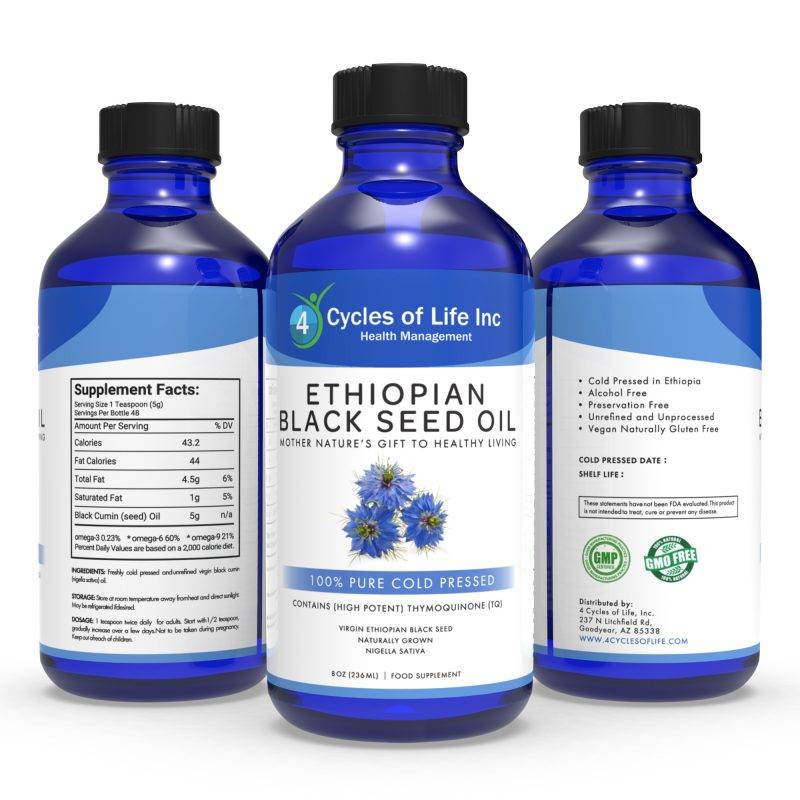
Our Ethiopian Black Seed Oil is 100% pure and cold-pressed from Nigella sativa seeds. In this guide, we’ll talk about what that means, what it tastes like, how to use it by mouth and on the skin, and who should talk to their provider first. And we’ll keep it honest. We’ll only tell you what’s on our product page and label, nothing made up.
What Is Ethiopian Black Seed Oil?
Ethiopian Black Seed Oil from 4 Cycles of Life is a 100% pure, cold-pressed oil made from Nigella sativa seeds. It naturally contains thymoquinone, an antioxidant compound found in black seed, and it’s crafted to complement your daily wellness routine and support overall vitality.*
Here’s a quick look at what the product page says:
| Detail | What the product page says |
|---|---|
| Price | $49.99 |
| Form | Oil |
| Ingredient | 100% pure cold-pressed black seed (Nigella sativa) oil |
| Key compound | Thymoquinone (naturally occurring) |
| Serving size | 1 teaspoon |
| Ways to use | By mouth, or a few drops on the skin |
| Suitable for | Most adults. Not for children. Avoid if pregnant or taking blood-thinning medicine; ask your provider first. |
What does “cold-pressed” mean here?
Cold-pressed means the seeds are pressed mechanically without high heat. Heat can change the taste, smell, and natural makeup of an oil, so pressing it cool helps keep it close to how nature made it. That’s why a good cold-pressed black seed oil tastes bold and smells peppery. That’s not a flaw, family. That’s the real thing.
What does “100% pure” mean here?
It means what’s in the bottle is black seed oil. No fillers, no blend of cheaper oils, no added flavors. One ingredient. When you’re building a daily routine, I like single-ingredient products because you always know exactly what you’re taking.
What’s Inside: Base, Support, and Flavor
When I build a blend, I think in three parts. The base is the foundation, the herb the whole formula leans on. The support herbs are the team that backs it up. And the flavor is what makes you want to take it every day. With Ethiopian Black Seed Oil, it’s simple. The seed is the base, the support, and the flavor, all in one.
The only ingredient: black seed oil (Nigella sativa)
Nigella sativa is a small flowering plant with pale blue-white flowers. Its seeds are tiny, black, and shaped like little teardrops. In kitchens across Ethiopia, North Africa, the Middle East, and South Asia, the whole seeds show up in breads, spice blends, and cheeses.
Traditional use: Black seed has been treasured for a very long time in African, Arabic, Persian, and Ayurvedic traditions as an everyday wellness seed.* In many households it’s known as “the seed of blessing.” It’s one of those plants that has been passed down hand to hand, generation to generation.
What is thymoquinone (TQ)?
Thymoquinone is one of the natural plant compounds found in black seed oil, and it’s the one people talk about most. It’s an antioxidant compound, and it’s part of why black seed oil has such a strong reputation in herbal circles.* Our product page says thymoquinone occurs naturally in this oil. It doesn’t list an exact percentage, so we won’t give you one.
Why “Ethiopian”?
Black seed grows in many places, including Ethiopia, Egypt, India, and Turkey. Where it grows changes the flavor and the natural character of the oil a little, the same way coffee tastes different depending on where it’s grown. And speaking of coffee, Ethiopia gave the world coffee too. That land knows a thing or two about seeds.
We also carry an Egyptian Black Seed Oil. Both come from the same plant, Nigella sativa. Some customers like to try both and pick the one their taste buds prefer. If you’re curious about the Egyptian one, we wrote a full guide to Egyptian Black Seed Oil too.
What Does It Taste Like?
Strong, peppery, a little bitter, with a warm spicy bite in the back of the throat. Some people describe it like oregano meets cumin with a pepper kick. If straight oil isn’t for you, our product page suggests mixing it with warm tea, honey, or a smoothie. That softens the bite a lot.
One tip: keep it out of hot cooking. Stir it into warm (not boiling) tea, or into food after it’s cooked, so you don’t cook away that fresh, cold-pressed character.
How to Use It, Step by Step
Okay, family. Here’s how to use it, following the product label and nothing extra.
- Read the label first. Every time you start a new product, read the label on the bottle in your hand. The bottle is always your best guide for how much and how often.
- Start low. Black seed oil is strong. Many folks start with a smaller amount and work up so their body can get to know it. Never go past the amount on the label.
- Serving size. Our product page lists the serving size as 1 teaspoon. Follow the label on your bottle for how many times a day, and don’t go over it.
- Take it your way. Straight off the spoon is the old-school way. The product page also suggests mixing it with warm tea, honey, or a smoothie.
- On the skin. The product page says you can apply a few drops directly to the skin, or massage it around your joints. Test a small spot first.
Simple ways to fit it into your day
- Pair it with a habit. Tie it to something you already do every day, like breakfast or your morning cup of tea. Same time, same place, and it becomes automatic.
- Keep the bottle where you’ll see it, but out of direct sun and away from the stove.
- Mind the Arizona heat. Don’t leave it in a hot car. Ever. Heat is not a friend to a cold-pressed oil.
- Close the cap tight after each use to keep air out.
- Keep a spoon just for it. That peppery taste lingers, so many folks keep one teaspoon for their oil.
Using it on the skin
Some people like to keep a second bottle in the bathroom for body care. After a shower, a few drops massaged into the skin, or around the knees and hands, can be a nice part of a self-care routine.* Always do a small patch test first, on the inside of your arm, and wait to see how your skin responds. Keep it away from your eyes.
From our shelf to your kitchen
At our counter in Peoria, black seed oil is one of the first things the elders ask about. Many of them grew up hearing about it from their parents and grandparents. I love that, because it means the knowledge got passed down. That’s what we’re here for, family. Learn it, use it right, and teach your family members and loved ones how to use it right too.
Who May Enjoy Ethiopian Black Seed Oil?
In general, this oil may suit adults who:
- Want a 100% pure, cold-pressed black seed oil.
- Are comfortable with a strong, peppery taste, or are happy to mix it with honey or tea.
- Want a single-ingredient product to add to a daily wellness routine.*
- Like an oil they can use both by mouth and on the skin.
Please Read This Before You Start
I love herbs. I’ve been teaching about them for a long time. But herbs are real plants with real strength, and natural does not mean right for every single person. So let’s be grown about it.
Talk to your healthcare provider first if you:
- Are pregnant, trying to get pregnant, or nursing.
- Take any prescription medicine or over-the-counter medicine. Herbs and medicines can affect each other, and only your provider or pharmacist can look at your full list.
- Are managing any ongoing health condition.
- Have a surgery or procedure coming up.
Notes about this herb
These notes are about black seed in general, not test results for this oil.
- Not for pregnancy. Our product page says to avoid use if pregnant. If you’re nursing or trying to conceive, ask your provider first.
- Not for children. The product page says do not use for children.
- Blood thinners and surgery: The product page says to avoid use if you take blood-thinning medicine and to ask your provider first. If you have surgery coming up, talk with your provider too.
- Other medicines: If you take medicine for blood pressure or blood sugar, ask your provider before adding black seed oil.
- Stomach upset: Some people get an upset stomach. Starting low and taking it with food or honey can help.
- On the skin: Some people get skin irritation from black seed oil. Test a small spot first.
Good habits with any herbal product
- Follow the label. Take only the suggested amount.
- Tell your healthcare provider about every herb and supplement you use, including this one.
- If you notice anything unusual, stop and call your provider.
- Store it away from heat and sun, with the cap closed tight, and out of reach of children.
I can’t give personal medical advice in a blog post, and I won’t pretend to. If you have a question about your own body, your provider is the right person to ask. Bring the bottle with you so they can read the label.
Frequently Asked Questions
How much should I take?
The product page lists a serving size of 1 teaspoon. Follow the directions on your bottle for how often, and never take more than the label says.
Can I put it on my skin?
Yes. The product page says you can apply a few drops directly to the skin or massage it around your joints. Do a patch test first.
How much thymoquinone is in it?
The page says thymoquinone occurs naturally in the oil but doesn’t list a percentage, so we won’t guess.
Can I cook with it?
It’s best not heated. Use it raw, straight off the spoon, or mixed into warm tea, honey, or a smoothie.
What’s the difference between the Ethiopian and Egyptian black seed oil?
Both are cold-pressed Nigella sativa oil. The difference is where the seed is grown, which can change the flavor a little. Try both and see which one you like best.
Is it the same as black seed capsules?
No. This is the liquid oil. Capsules are a different product.
Can I take it while pregnant or give it to my kids?
No. The product page says to avoid use if pregnant and do not use for children.
More From 4 Cycles of Life
If Ethiopian Black Seed Oil sounds like your speed, here are a few more you might like:
- Egyptian Black Seed Oil is our other cold-pressed black seed oil, pressed from Egyptian seed.
- Turmeric Living Tonic is our warm, spicy daily tonic.
- Golden Glow Herbal Tea Blend is a smooth tea you can stir your oil into.
- Browse everything, from loose-leaf teas to bitters, tonics, and cold-pressed oils, in our full shop.
Come See Us in Peoria
4 Cycles of Life is a Black-owned herbal shop and tea bar. We started online in Arizona back in July 2014, shipping herbs and teas to families all over the country. On October 3, 2026, we opened our storefront doors at 8110 W Peoria Ave, Ste 103, in Peoria, Arizona. You can read more about our story on our About page.
If you’re in the West Valley, come on in, family. We’re open Tuesday through Friday, 10:30am to 5:30pm, and Saturday, 9am to 2pm. You can see Ethiopian Black Seed Oil in person, ask questions at the counter, and sip something at the tea bar while you’re there. If you’re not local, no problem. We still ship nationwide from 4cyclesoflife.com, the same way we’ve done since 2014.
Ready to Try It?
If you’re ready for a 100% pure, cold-pressed Ethiopian black seed oil, read the full label and order on the Ethiopian Black Seed Oil product page. Start low, go slow, and stick to the label.*
Share this with your family members and loved ones, and remember: Mother Nature is your gift to healthy living.
These statements have not been evaluated by the Food and Drug Administration. This product is not intended to diagnose, treat, cure, or prevent any disease. Always talk to your healthcare provider before starting any new supplement, especially if you are pregnant, nursing, taking medication, or managing a health condition.
