
Articles
African Mango-X: What It Is, What Research Says, and How It Fits a Balanced Routine
Jul
Come on in, family. Let’s talk about a fruit from the motherland: African mango.
A lot of you have asked me about African Mango-X. So I want to give you the real story. Where it comes from, what the research honestly says, what to watch out for, and how it fits next to the everyday habits that matter most.
What Is African Mango?
African mango is the common name for Irvingia gabonensis, a tree that grows in the forests of West and Central Africa. It’s also called bush mango or wild mango. It’s not the same as the sweet mango you buy at the grocery store, though the fruit looks a bit like one.
In West and Central Africa, the fruit is eaten, and the seeds (sometimes called ogbono or dika nuts) are dried and ground. Ground ogbono seed is famous in Nigerian cooking. It thickens the much-loved ogbono soup, giving it that smooth, drawn texture. So before it was ever a supplement, African mango was food. Family food.
Why Is African Mango Sold as a Supplement?
In recent years, African mango seed extract has become popular in supplements, mostly marketed for weight. That’s why you see it in so many stores and online.
But I’m going to be straight with you, family. Popularity isn’t proof.
What Does the Research Honestly Say?
The Office of Dietary Supplements (ODS) at the National Institutes of Health has a fact sheet on weight-loss supplements. Here’s what it says about African mango:
- Does it work? African mango might help you lose a very small amount of weight.
- Is it safe? African mango seems to be safe, but its safety hasn’t been well studied.
- Possible side effects: headache, sleeping problems, flatulence, and gas.
That’s it. A very small amount, maybe. Safety not well studied. That’s the honest picture.
Also important: those studies looked at African mango seed extract. African Mango-X itself hasn’t been studied. Research on one ingredient in one form doesn’t tell us how a different product will work. So we don’t make weight, cholesterol, or blood sugar claims for African Mango-X.
What Is African Mango-X?
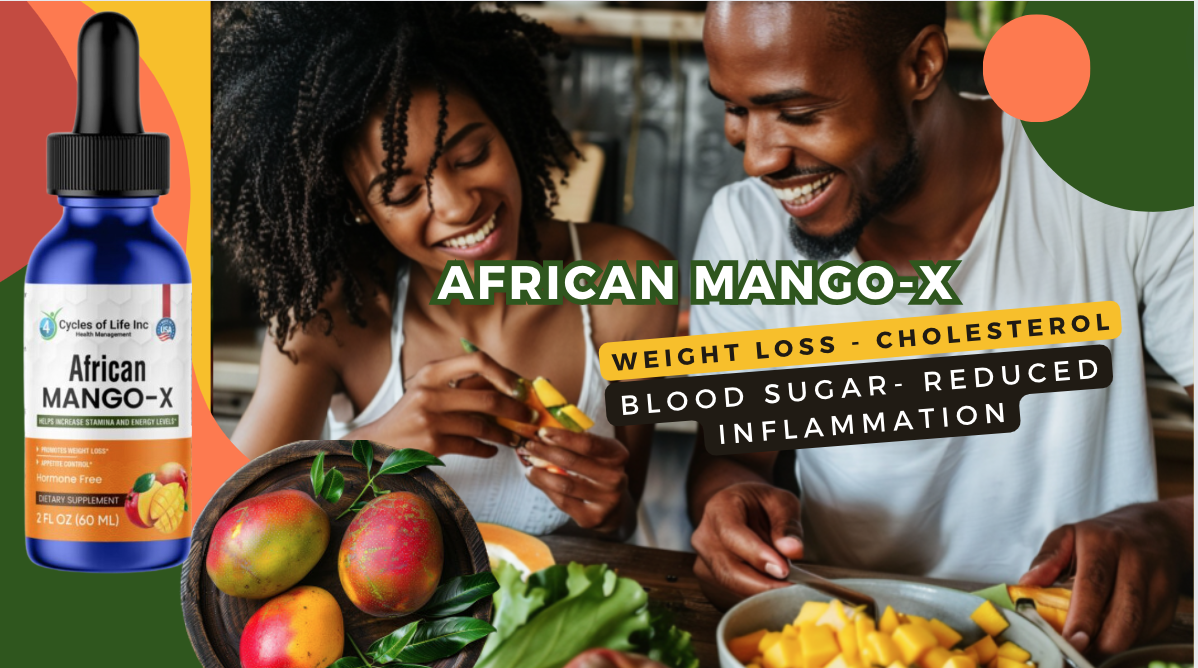
African Mango-X is a 4 Cycles of Life product. The product page describes it as an African mango supplement with a fruity taste, made from a fruit whose seeds have a long traditional history.
How to use it: Follow the directions on your label. Don’t take more than the label says.
The Habits That Do the Heavy Lifting
Here’s the truth, family. No bottle does the work for you. The heavy hitters are the daily habits. If you choose to use a supplement, it sits on top of these, not in place of them.
1. Eat more fiber-rich foods
Fill your plate with vegetables, fruit, beans, lentils, and whole grains. Fiber helps you feel full and supports regular digestion. Bonus: try a bowl of ogbono soup loaded with greens.
2. Build a balanced plate
- Half the plate: vegetables and fruit
- A quarter: protein (beans, fish, chicken, tofu, eggs)
- A quarter: whole grains (brown rice, oats, quinoa)
- A little healthy fat (olive oil, avocado, nuts)
3. Drink water
Keep a bottle with you. Swap sugary drinks for water or unsweetened tea.
4. Move your body
Walk, dance, stretch, garden. A little movement most days adds up.
5. Sleep
Aim for 7 or more hours. Tired bodies tend to crave more snacks.
6. Go slow
Small changes stick. Pick one this week. Add another next week. It ain’t rocket science.
A Simple After-Dinner Tea Ritual
Instead of dessert every night, try a warm cup of caffeine-free tea after dinner. Build it the Base, Support, and Flavor way:
- Base: Rooibos or chamomile
- Support: Rose hips or nettle leaf
- Flavor: Peppermint, fennel seed, ginger root, or Ceylon cinnamon chips
- Heat 8 to 10 oz of water.
- Add 1 to 2 teaspoons of herbs.
- Steep 5 to 10 minutes. Strain.
- Enjoy it plain. No sugar needed.
Little nugget: A warm, minty cup after dinner can be a signal to your brain that the kitchen is closed for the night.
Safety: Please Read First
- Talk to your healthcare provider first if you take any medicines, especially for diabetes, cholesterol, or blood pressure, or if you have a health condition.
- Talk to your provider first if you’re pregnant, nursing, or buying for a child or teen.
- Watch for side effects the ODS lists: headache, trouble sleeping, flatulence, and gas. Stop and talk to your provider if anything bothers you.
- Follow the label. Take only the suggested amount.
- Tell your provider about every supplement you use.
- Be careful with weight-loss products in general. The ODS notes that weight-loss supplements can have side effects and interact with medicines, and some products sold for weight loss have been found to contain hidden prescription drugs that aren’t on the label. Buy from sellers you trust, and talk to your provider.
Frequently Asked Questions
Will African Mango-X help me lose weight?
We don’t make that claim. The ODS says African mango extract might help people lose a very small amount of weight, and African Mango-X itself hasn’t been studied. Daily habits matter most.
Is African mango the same as regular mango?
No. African mango (Irvingia gabonensis) is a different tree. Its seeds, called ogbono, are used in West African cooking.
What are the side effects?
The ODS lists headache, sleeping problems, flatulence, and gas, and says safety hasn’t been well studied.
How do I take African Mango-X?
Follow the directions on your label.
Can I take it with my medicine?
Ask your doctor or pharmacist first.
Learn More or Try It
If you’d like to try it as part of a balanced routine, you can read the label details on the African Mango-X product page. For an after-dinner cup, build your own custom herbal tea with peppermint or fennel as your flavor, or try the Golden Glow Herbal Tea Blend.
Come see us at 8110 W Peoria Ave, Ste 103, Peoria, AZ 85345, Tuesday through Friday, 10:30am to 5:30pm, and Saturday, 9am to 2pm.
Mother nature is your gift to healthy living.
These statements have not been evaluated by the Food and Drug Administration. This product is not intended to diagnose, treat, cure, or prevent any disease. This article is for general education and is not medical advice.
