
Articles
Frankincense Essential Oil: Aroma, History, and Safe Everyday Use
Mar
Come on in, family. Let’s talk about one of the oldest aromas in human history: frankincense.
You may know the name from the Bible story of the wise men, who brought gold, frankincense, and myrrh. People have treasured this resin for thousands of years. Today, a lot of folks enjoy frankincense essential oil in their diffusers and in simple, diluted skin-care routines. Here’s what it is, how to use it, and how to stay safe.
Where Does Frankincense Come From?
Frankincense comes from Boswellia trees. According to the National Center for Complementary and Integrative Health (NCCIH), Boswellia serrata is a tree native to the mountain regions of Northern Africa, India, and the Middle East, and the extract is made from the tree’s gum resin. Frankincense is that resin.
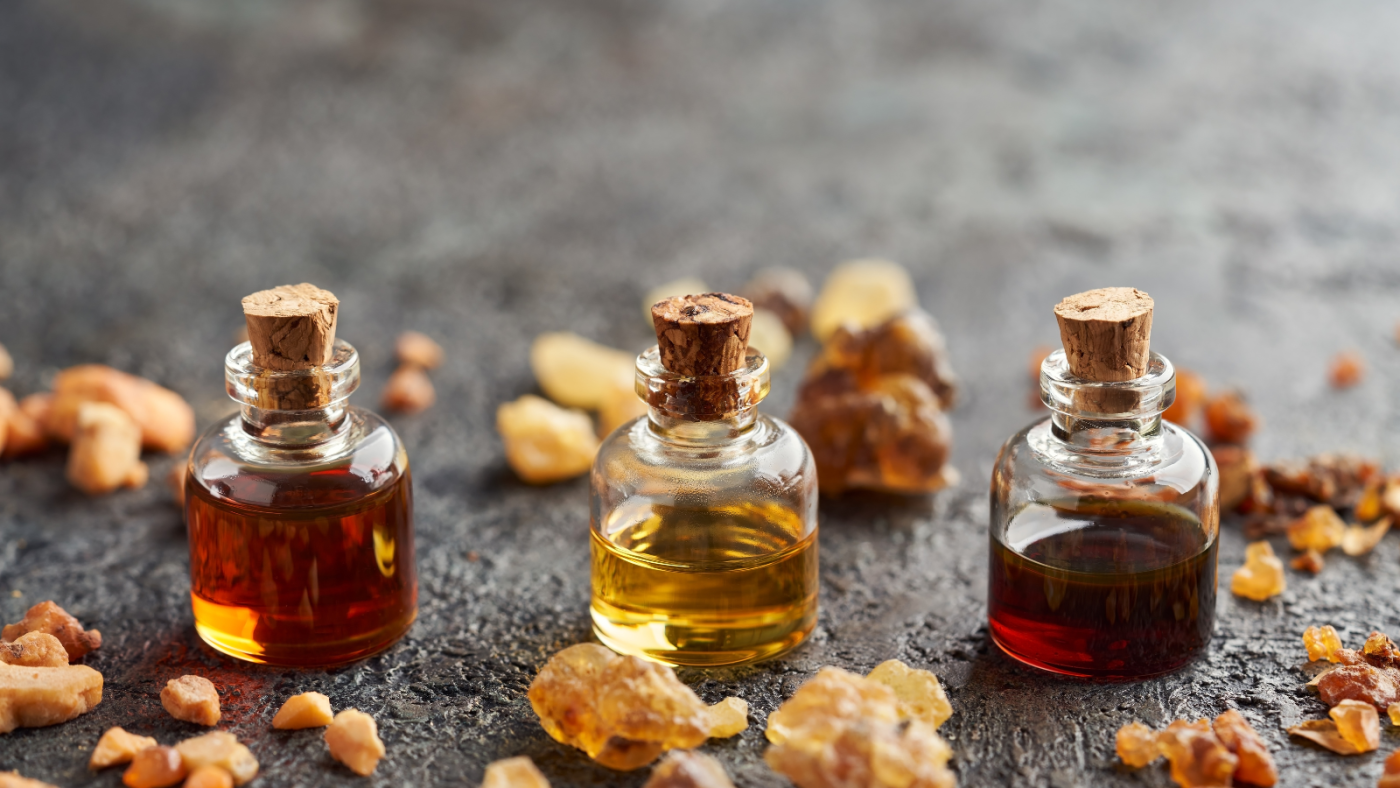
When the bark of the tree is cut, a milky sap comes out and hardens into “tears” of resin. Those tears are collected and can be burned as incense or steam-distilled to make essential oil.
A Long, Rich History
Frankincense has been part of religious ceremonies, perfumes, and incense in many cultures for a very long time, across Africa, the Middle East, and beyond. In traditional Ayurvedic practice from India, boswellia has been used for a long time too.
That history is a big part of why people love it. When you open a bottle, you’re smelling something your ancestors may have smelled too.
What Does Frankincense Smell Like?
Frankincense has a warm, woody, slightly sweet, and lightly citrusy aroma, with a soft, resin-like depth. A lot of people describe it as calm and grounding. It’s not loud. It’s the kind of smell that settles into a room.
It pairs nicely with:
- Myrrh, for a deeper, earthier, more resinous blend
- Lavender, for a soft floral note
- Citrus oils, like lemon or orange, for a brighter blend
- Cedarwood or sandalwood, for a woodsy feel
What Is Aromatherapy?
NCCIH describes aromatherapy as using essential oils from plants (flowers, herbs, or trees) as a complementary health approach. The oils are most often inhaled, or diluted and applied to the skin.
That’s how we use frankincense here: in the air, and diluted on the skin. Not by mouth.
How to Use Frankincense Essential Oil
1. In a diffuser
This is the easiest way.
- Fill your diffuser with water to the line.
- Add 3 to 5 drops of frankincense (follow your diffuser’s directions).
- Run it for 30 to 60 minutes, then give the room a break.
- Keep the room aired out, and keep pets in mind.
Little nugget: Try 3 drops frankincense and 2 drops lavender in the evening. Turn the lights down, put on some soft music, and let that be your wind-down time.
2. Diluted on the skin
Essential oils are very strong. Always mix them with a carrier oil before they touch your skin. Good carrier oils include jojoba, sweet almond, fractionated coconut, and olive oil.
A gentle starting mix for adults: about 1 to 2 drops of essential oil in 1 teaspoon of carrier oil. Use less for sensitive skin.
- Mix in a small glass dish or roller bottle.
- Patch test first. Rub a little on your inner arm. Wait 24 hours.
- If there’s no redness or itching, massage a small amount into your hands, arms, or shoulders.
3. In a homemade body oil
Add 6 to 10 drops of frankincense to 1 ounce (2 tablespoons) of your favorite carrier oil. Shake well and use after a warm shower.
4. On a cotton ball or tissue
Put a drop on a cotton ball and set it nearby while you read, pray, or work. Easy peasy.
Safety: Please Read First
The National Cancer Institute’s aromatherapy summary notes that safety testing has found very few side effects when essential oils are used as directed, but also says:
- Swallowing large amounts of essential oils is not recommended.
- Allergic reactions and skin irritation can happen when essential oils stay on the skin for a long time.
NCCIH notes that frankincense may be safe to use on the skin or for aromatherapy.
Here are my plain safety rules:
- Don’t drink it or add it to food or tea. Use it in the air or diluted on skin.
- Always dilute before skin use.
- Patch test new blends.
- Keep it away from eyes, inside the nose, ears, and other sensitive areas. If it gets in your eyes, rinse well with water. If irritation doesn’t go away, call your provider or Poison Control at 1-800-222-1222.
- Don’t use on broken or irritated skin.
- Keep bottles closed and out of reach of children and pets.
- Ask your provider first if you’re pregnant, nursing, have asthma or another breathing condition, have a skin condition, or are using it around babies or young children.
- Stop using it if you notice a rash, itching, headache, or trouble breathing.
- Store it in a cool, dark place with the cap on tight.
Frequently Asked Questions
Can I put frankincense oil in my tea or water?
No. We recommend aromatic and diluted skin use only. The NCI notes that swallowing large amounts of essential oils is not recommended.
How many drops should I use in a diffuser?
Start with 3 to 5 drops, or follow your diffuser’s directions.
Can I put frankincense directly on my skin?
Always dilute it in a carrier oil first and do a patch test.
Is frankincense the same as boswellia?
Frankincense is the resin of Boswellia trees. Boswellia extracts sold as supplements are a different product from frankincense essential oil.
What blends well with frankincense?
Myrrh, lavender, citrus oils, cedarwood, and sandalwood.
Bring Frankincense Home
Ready to try it? Shop our Frankincense Essential Oil. For a classic pairing, add Myrrh Essential Oil, with its warm, resinous aroma. For a soft evening blend, try it with Lavender Essential Oil. Always follow the label, and dilute before skin use.
Visit us at 8110 W Peoria Ave, Ste 103, Peoria, AZ 85345, Tuesday through Friday, 10:30am to 5:30pm, and Saturday, 9am to 2pm. Share this with your family members and loved ones.
Mother nature is your gift to healthy living.
These statements have not been evaluated by the Food and Drug Administration. This product is not intended to diagnose, treat, cure, or prevent any disease. This article is for general education and is not medical advice.
