
Articles
Goji Berries: A Colorful Food for Your Daily Plate
Mar
Come on in, family. Let’s talk about a little red berry with a long history: the goji berry.
You may have seen goji berries in the trail mix aisle or in a smoothie shop. Maybe you’ve wondered what they are and how to use them. This guide keeps it simple. What they are, what they taste like, how to eat them, and what to know first.
What Are Goji Berries?
Goji berries come from a shrub called Lycium barbarum (and a close cousin, Lycium chinense). They’re also called wolfberries. In Chinese, they’re often called gou qi zi.
The berries are small, oval, and bright orange-red. Most of the goji berries sold in the U.S. are dried, a lot like raisins. You can also find goji powder and goji juice.
A Food With a Long History
Goji berries have been part of traditional cooking and traditional practices in China and other parts of Asia for a very long time. Memorial Sloan Kettering Cancer Center’s “About Herbs” database notes that lycium fruit is used in traditional medicine in several Asian countries, and it’s often combined with other botanicals in Chinese tradition.
In the kitchen, goji has a long history in soups, porridges, and teas. That’s the part I love. It’s a food. You eat it. You enjoy it.
Here’s the honest part: in the U.S., goji gets marketed as a “superfood.” The same MSK database says the safety and benefits of lycium for long-term health conditions have not been established, and that more well-designed studies are needed. So we’re not going to tell you goji does anything special for any condition. We’re going to tell you how to enjoy it.
What Do Goji Berries Taste Like?
Dried goji berries are chewy, a little sweet, and a little tart. Some people say they taste like a cross between a cranberry and a cherry, with a slightly earthy, almost herbal finish. They’re not as sweet as raisins.
If they feel too tough, soak them in warm water for 5 to 10 minutes. They plump right up.
Simple Ways to Eat Goji Berries
It ain’t rocket science, family. Use them like any other dried fruit.
1. Sprinkle on oatmeal
Stir a small handful of goji berries into your oatmeal while it cooks. Add cinnamon and a few walnuts.
2. Make your own trail mix
Mix goji berries with:
- Almonds or walnuts
- Pumpkin seeds or sunflower seeds
- A few dark chocolate chips, if you like
Keep a little bag in your car or your purse for a snack.
3. Blend into a smoothie
Soak a tablespoon of goji berries for 10 minutes, then blend with:
- 1 banana
- A handful of spinach
- 1 cup of plant milk
- A spoonful of nut butter
4. Add to salads
Toss goji berries into a green salad with sliced apple, toasted seeds, and a squeeze of lemon. The red color pops.
5. Cook in soups and porridge
In many Chinese kitchens, goji berries go into chicken soup, vegetable broth, or rice porridge (congee). Add them in the last 10 minutes of cooking so they soften but keep their shape.
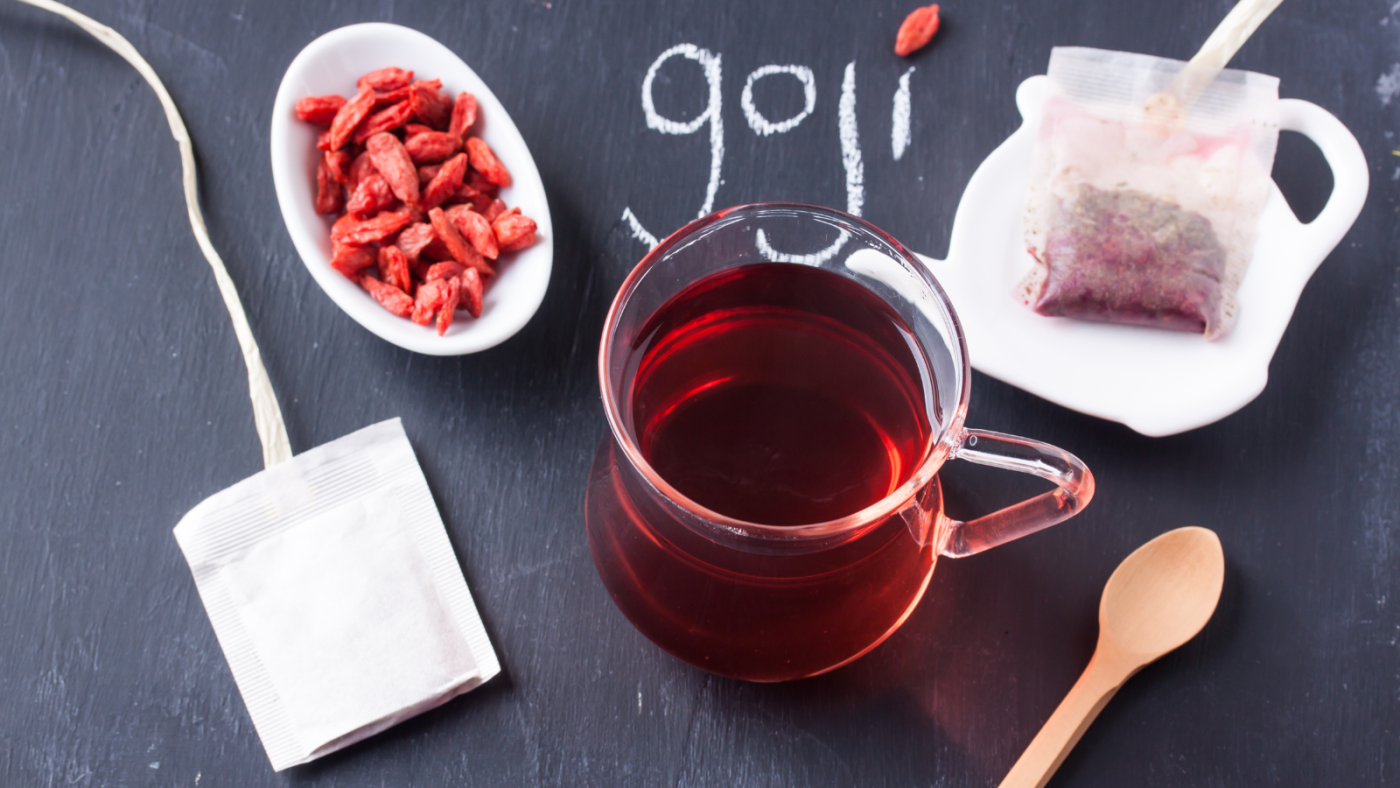
6. Brew a simple goji tea
Here’s a cozy cup using the Base, Support, and Flavor way:
- Base: Rooibos or chamomile (caffeine-free)
- Support: A small spoonful of dried goji berries
- Flavor: A slice of fresh ginger, a little orange peel, or a cinnamon chip
- Heat 8 to 10 oz of water.
- Add your herbs and goji berries.
- Steep 5 to 10 minutes.
- Strain, or eat the soft berries with a spoon at the end.
Little nugget: Don’t toss the berries after steeping. They get soft and sweet. Spoon them out and eat them.
What’s in Goji Berries?
Like other colorful fruits, goji berries bring natural sugars, fiber, and plant pigments. Nutrition varies by brand and how the berries were dried. Check the Nutrition Facts label on your bag to see serving size, calories, sugar, and fiber.
Since they’re dried, the sugar is concentrated, just like raisins. A small handful is a good serving.
How Much Should I Eat?
As a food, think “a small handful,” the same way you’d use raisins or dried cranberries. Follow the serving size on the package. If you use a goji powder or juice, follow that label.
Don’t go overboard. More isn’t better, especially with dried fruit.
Safety: Please Read First
Goji berries are a food, but food can still interact with your body and your medicines.
Talk to your doctor or pharmacist first if you take a blood thinner
Memorial Sloan Kettering’s About Herbs database reports a few cases of elevated INR (a blood-clotting test) in people taking warfarin or other anticoagulants after they had lycium products, like goji tea, juice, or wine. If you take warfarin or another blood thinner, please talk to your provider before adding goji to your routine.
Other medicines
The same database notes lycium may affect how the body processes certain prescription drugs (those processed by liver enzymes called CYP3A4, 2C9, and 2C19). If you take prescription medicines, ask your pharmacist before using goji often, especially as a juice, powder, or concentrated tea.
Food allergies
MSK notes allergic reactions have been reported in people with certain plant-based food allergies. If you have food allergies, try a very small amount first, or ask your doctor.
Other good habits
- If you’re pregnant or nursing, ask your provider before using goji products beyond normal food amounts.
- If you’re going through any medical care, tell your care team about every food supplement, juice, or herb you use.
- Stop eating it if you notice anything unusual, and talk to your provider.
Frequently Asked Questions
Are goji berries the same as wolfberries?
Yes. Goji berry and wolfberry are two names for the fruit of Lycium barbarum and related plants.
Do I need to soak goji berries?
No, but soaking them in warm water for 5 to 10 minutes makes them softer and juicier.
Can I eat goji berries every day?
Many people enjoy a small handful as part of a varied diet. If you take warfarin or other blood thinners, talk to your doctor first.
What do goji berries taste like?
Chewy, mildly sweet, and a little tart, with an earthy finish.
Do goji berries help with any health condition?
We don’t make that claim. Researchers are still studying goji, and its benefits for long-term health conditions haven’t been established. Enjoy it as a colorful food.
Bring Color to Your Cup
Goji pairs nicely with fruity, caffeine-free teas. Try a scoop of goji in a cup of Ruby Sunrise Herbal Tea Blend, with rooibos, hibiscus, apple, orange, and Ceylon cinnamon. Or build your own custom herbal tea with rose hips, apple, and orange peel, and add your goji at home. For something bright and gentle, the Golden Glow Herbal Tea Blend works too.
Stop by the store at 8110 W Peoria Ave, Ste 103, Peoria, AZ 85345, Tuesday through Friday, 10:30am to 5:30pm, and Saturday, 9am to 2pm.
Mother nature is your gift to healthy living.
These statements have not been evaluated by the Food and Drug Administration. This product is not intended to diagnose, treat, cure, or prevent any disease. This article is for general education and is not medical advice.
