
Articles
Chamomile for a Calm Night: What the Studies Say
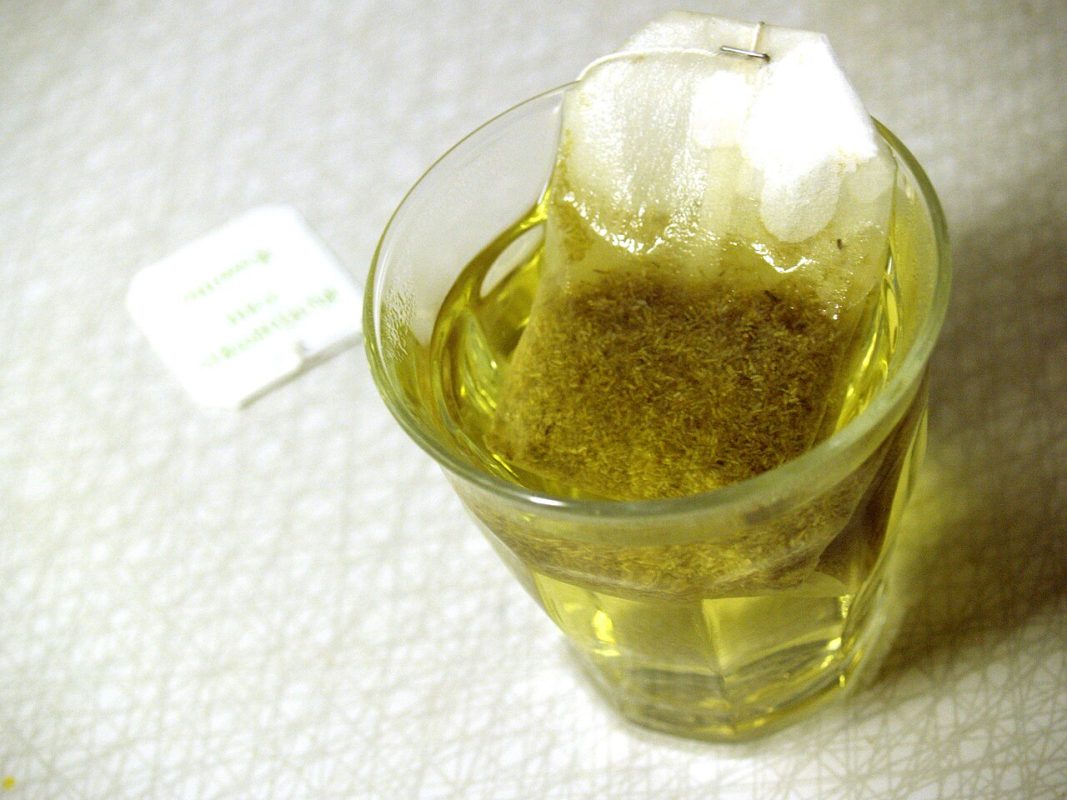
Oct
Peace and blessings, family. Herbalist Kareem here. There’s a reason chamomile is the herb so many of our grandmothers reached for at the end of a long day. A warm cup, a quiet house, and that soft apple-like smell. From ancient Egypt to Europe to Iran, chamomile has been one of the most loved evening herbs on earth.
But you asked me for more than tradition. You want to know what the research actually shows. So let’s look at real human studies from around the world, the good findings and the limits.
What Chamomile Is
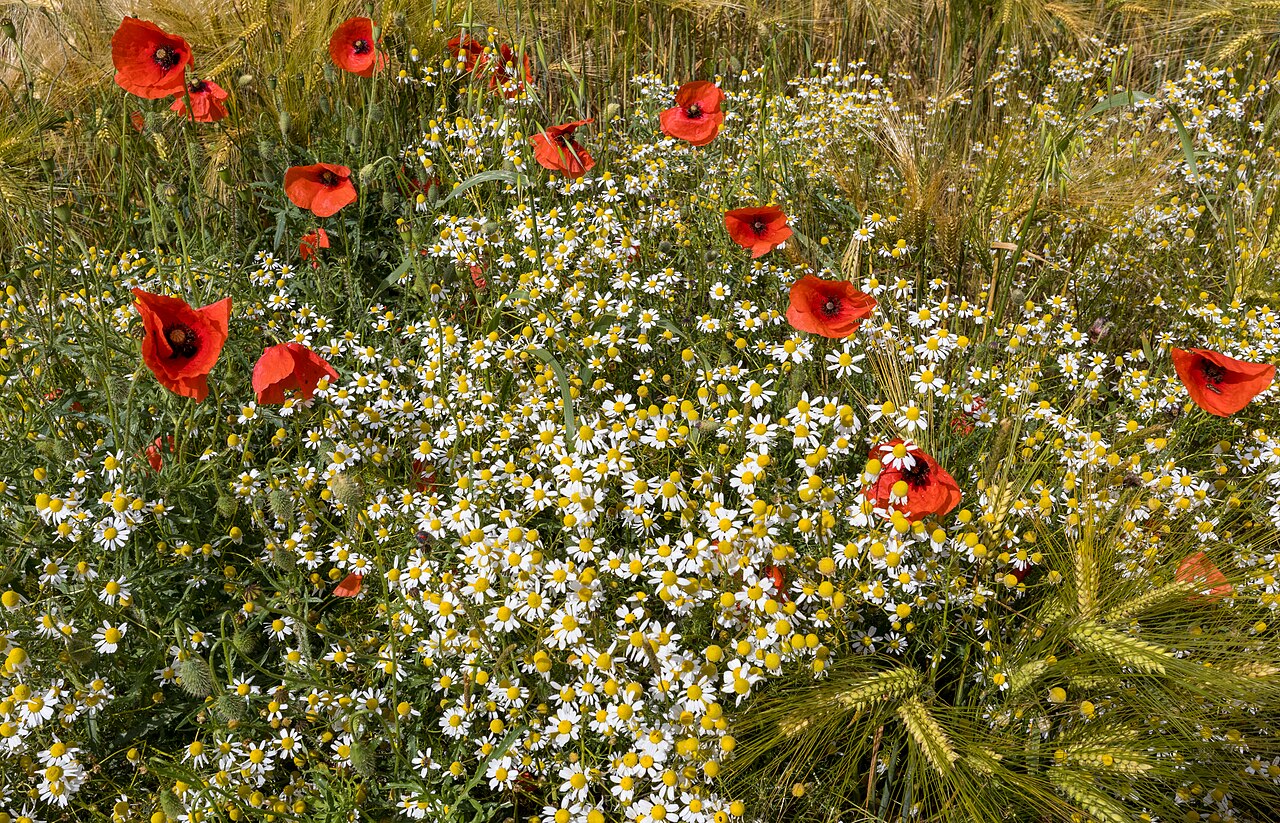
The chamomile in most teas is German chamomile, Matricaria chamomilla (also written Matricaria recutita). We use the small daisy-like flower heads. They contain natural plant compounds, including one called apigenin, that researchers study for their relaxing qualities.
A Little History
Chamomile shows up in the herbal writings of ancient Egypt, Greece and Rome, and it’s still one of the most-used herbal teas in the world today. In Iran it’s called babooneh, and in Spanish-speaking homes it’s manzanilla, often served to calm the whole family after dinner. When so many cultures, separated by oceans, land on the same gentle flower for the same evening ritual, I pay attention. Then I go look at what the scientists have found, which is exactly what we’re doing here.
Why Rest Matters
Sleep is when your body and mind reset. Good rest supports your mood, focus, energy and overall wellness. The basics come first: a regular bedtime, a dark and cool room, less screen time before bed, and less caffeine late in the day. A calming cup of tea can be a lovely signal to your body that it’s time to slow down.
What the Research Says
All five studies below are in PubMed, linked at the bottom so you can read them yourself.
1. Iran: older adults in a care home (2017). In Karaj, Iran, 60 adults age 60 and older were randomly given chamomile extract capsules (200 mg, twice a day) or a placebo capsule for 28 days. Sleep quality, measured with a standard questionnaire, was better in the chamomile group than the placebo group after the study. Limits: single-blind, one care home, and it used capsules, not tea. (Adib-Hajbaghery & Mousavi, 2017)
2. Taiwan: new mothers drinking chamomile tea (2016). 80 postpartum women with poor sleep were assigned to drink chamomile tea for 2 weeks or receive usual care. The tea group reported fewer sleep problems tied to physical discomfort and better mood scores right after the 2 weeks, but by 4 weeks both groups looked about the same. Limits: no placebo drink, and the benefit didn’t last after the tea stopped. (Chang & Chen, 2016)
3. USA: a pilot trial at the University of Michigan (2011). 34 adults with long-term sleep trouble took chamomile extract (270 mg twice a day) or placebo for 28 days. There were no significant differences in sleep diary measures. Some small-to-moderate trends favored chamomile, like falling asleep a bit faster and better daytime functioning, while total sleep time slightly favored placebo. Limits: a small pilot. I’m including it because honest research includes the mixed results. (Zick et al., 2011)
4. USA: long-term chamomile and everyday worry (2016). At the University of Pennsylvania, 179 adults took chamomile extract for 12 weeks. The 93 who responded well were then randomly kept on chamomile or switched to placebo for up to 26 weeks. The chamomile group kept their worry scores significantly lower, though the difference in how many people slipped back was not statistically significant. Chamomile was well tolerated over the long term. Limits: this study looked at anxious feelings rather than sleep, and it used a high-dose extract (1,500 mg a day), not tea. (Mao et al., 2016)
5. International: a systematic review and meta-analysis (2019). A team from Vietnam, Japan, Egypt, Saudi Arabia and other countries pooled 12 randomized trials. Combined, chamomile was linked with a meaningful improvement in sleep quality, while the evidence on other measures was weaker or limited to a single trial. Side effects were mild. Limits: the authors called for larger trials. (Hieu et al., 2019)
The honest bottom line: research from Asia, the Middle East and North America suggests chamomile may help support relaxation and restful sleep quality. Results are mixed, studies are mostly small, and many used concentrated extracts rather than a cup of tea. It’s a gentle helper, not a magic switch.
My Evening Chamomile Ritual
Here’s how I wind down:
- About 45 to 60 minutes before bed, put the kettle on and dim the lights.
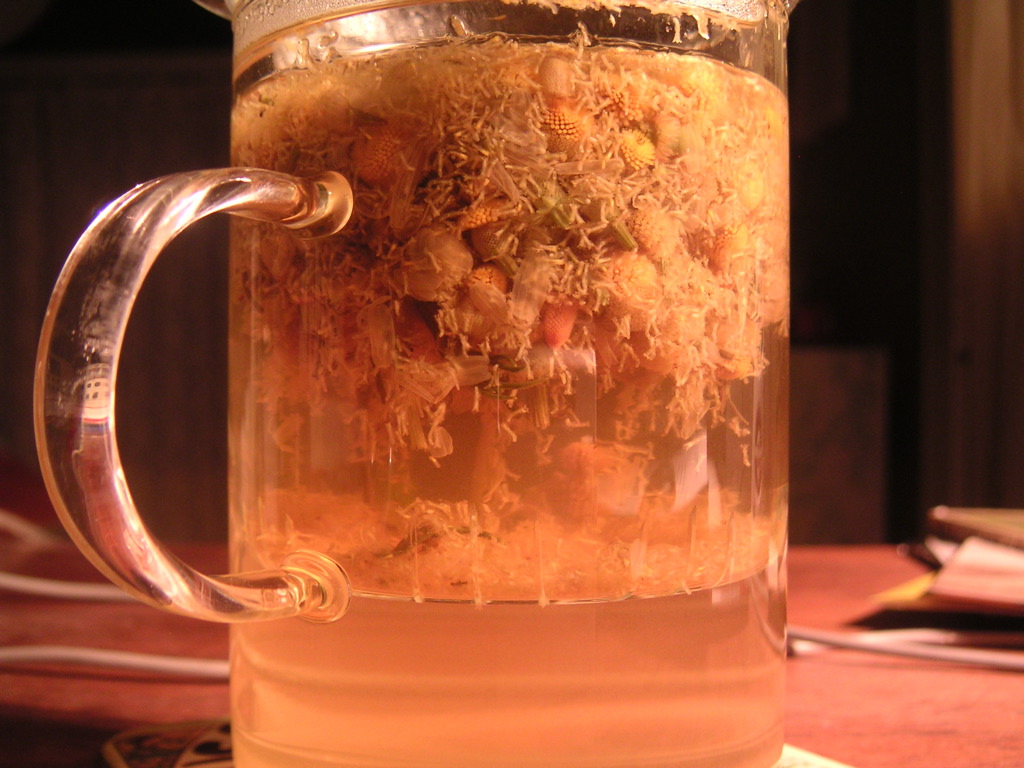
- Steep 1 to 2 teaspoons of dried chamomile (or a blend) in 8 ounces of hot water, covered, for 5 to 10 minutes. Covering it keeps in the aromatic oils.
- Put the phone down, sip slowly, and take a few deep breaths.
- Make it a nightly habit. Consistency is part of the ritual.
- Keep a simple sleep note for two weeks: what time you went to bed and how rested you felt. It helps you see what’s working for you.
My Sleepy Time Tea is built around chamomile and made for exactly this kind of evening. If you want chamomile earlier in the day with a brighter, citrusy taste, try Golden Glow Herbal Tea Blend with chamomile, ginger, lemongrass and lemon. Both are naturally caffeine-free.

Who Should Talk With a Provider First
Check with your healthcare provider before using chamomile regularly if you:
- Take blood thinners such as warfarin, sedatives or sleep medicine, blood pressure medicine, or any prescription.
- Are allergic to ragweed, daisies, marigolds, or other plants in the daisy family.
- Are pregnant or breastfeeding.
- Have a surgery coming up.
FAQ
How long before bed should I drink chamomile tea?
Many people enjoy it 30 to 60 minutes before bed, as part of a wind-down routine.
Is chamomile tea as strong as the capsules used in studies?
Not necessarily. Several studies used concentrated extracts, so a cup of tea may be gentler. The Taiwan study did use tea.
Can I drink chamomile every night?
Many people do, and the long-term study found it was well tolerated. Talk with your provider if you take medications.
Does chamomile have caffeine?
No. Chamomile is naturally caffeine-free.
Looking for a caffeine-free herbal tea in Peoria? Stop by our tea store & herbal shop in Peoria, AZ and build a custom herbal tea blend with chamomile as your Base, or ask me about our ready-made blends.
Give Thanks
Much love and thanks to Tony Pantalleresco for the plant wisdom he’s shared with so many of us. Rest well, family.
— Herbalist Kareem
These statements have not been evaluated by the Food and Drug Administration. This content and these products are not intended to diagnose, treat, cure, or prevent any disease. This article is for education only and is not medical advice. Talk with your healthcare provider before using herbs, especially if you are pregnant, nursing, or take blood pressure, blood-thinning, sedative, or other medications.
References
- Adib-Hajbaghery M, Mousavi SN. The effects of chamomile extract on sleep quality among elderly people: a clinical trial. Complement Ther Med. 2017. Iran. PubMed 29154054 · doi:10.1016/j.ctim.2017.09.010
- Chang SM, Chen CH. Effects of an intervention with drinking chamomile tea on sleep quality and depression in sleep disturbed postnatal women: a randomized controlled trial. J Adv Nurs. 2016. Taiwan. PubMed 26483209 · doi:10.1111/jan.12836
- Zick SM, Wright BD, Sen A, Arnedt JT. Preliminary examination of the efficacy and safety of a standardized chamomile extract for chronic primary insomnia: a randomized placebo-controlled pilot study. BMC Complement Altern Med. 2011. USA. PubMed 21939549 · doi:10.1186/1472-6882-11-78
- Mao JJ, et al. Long-term chamomile (Matricaria chamomilla L.) treatment for generalized anxiety disorder: a randomized clinical trial. Phytomedicine. 2016. USA. PubMed 27912875 · doi:10.1016/j.phymed.2016.10.012
- Hieu TH, et al. Therapeutic efficacy and safety of chamomile for state anxiety, generalized anxiety disorder, insomnia, and sleep quality: a systematic review and meta-analysis. Phytother Res. 2019. Vietnam/Japan (international team). PubMed 31006899 · doi:10.1002/ptr.6349
Image Credits
- Chamomile tea: cyclonebill, CC BY-SA 2.0, Wikimedia Commons
- Glass of chamomile tea: Greg, CC BY-SA 2.0, Wikimedia Commons
- Wild chamomile field: JackyM59, CC BY-SA 4.0, Wikimedia Commons
